Research projects developed in cooperation with partners

The North Pacific Ocean circulation for The Ocean Cleanup
The Ocean Cleanup has developed an oceanic cleanup system which is being used in the Great Pacific Garbage Patch (GPGP), the greatest of all oceanic garbage patches. After years of investigation, including numerical simulations of the ocean circulation, aerial surveys, satellite survey and local sampling, we now know that plastics garbage
The Ocean Cleanup has developed an oceanic cleanup system which is being used in the Great Pacific Garbage Patch (GPGP), the greatest of all oceanic garbage patches. After years of investigation, including numerical simulations of the ocean circulation, aerial surveys, satellite survey and local sampling, we now know that plastics garbage accumulates in small patches, which we call "hotspots". Finding the location and space-evolution of these hotspots is our job in this project.
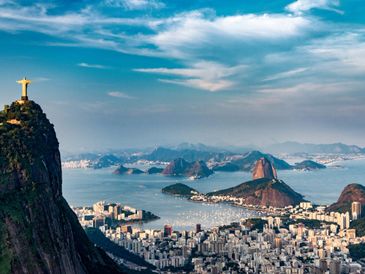
Deep layer circulation in Campos Bay, off Rio de Janeiro, Brazil
This project is being developed to CENPES (Centro de Pesquisas, Desenvolvimento e Inovação Leopoldo Américo Miguez de Mello), in Rio de Janeiro. The objective is to map the variability of ocean currents and their extreme values near the bottom of the Campos Basin, with an emphasis on 10-year maximum values. These values are very important for offshore structural engineering projects.
Numerical simulation of Panama Bay circulation and plastic debris dispersal
Numerical simulation of Panama Bay circulation and plastic debris dispersal
The Ocean Cleanup (TOC) organization aims to clean 1,000 rivers, which is done by deploying "Interceptors" in each river. The Interceptor is a device developed by TOC to capture plastic debris in rivers. At Atlantech, our job is to perform numerical simulations of rivers and the coastal area around the river mouth, so that we can understand the dispersal of plastic debris w/o interceptors.

Storm surge forecast in southern Brazil
Data assimilation with Ensemble Optimal Interpolation
Data assimilation with Ensemble Optimal Interpolation
This project is conducted in partnership with RENOMO, the Brazilian network for observing and monitoring the oceans and coastal regions.
Our challenge is to implement an operational system based on coupled atmospheric and oceanic models to predict coastal river flooding and sea level rise caused by storms in southern Brazil.
Coastal riv
This project is conducted in partnership with RENOMO, the Brazilian network for observing and monitoring the oceans and coastal regions.
Our challenge is to implement an operational system based on coupled atmospheric and oceanic models to predict coastal river flooding and sea level rise caused by storms in southern Brazil.
Coastal river flooding and sea level rise caused by storm surges have become a problem in southern Brazil in recent years. The most devastating episode occurred in May 2024, when the state of Rio Grande do Sul recorded persistent and extraordinary rainfall, equivalent to three months' worth of precipitation on average in a two-week period, with an average accumulation of 420 mm (Simões-Sousa et al., 2025; Clarke et al., 2026).
According to Simões-Sousa (2025), a combination of rare atmospheric conditions caused this unprecedented flooding event. Central and southeastern Brazil suffered an intense heat wave, with temperatures more than 6°C above average during April and May. The extreme temperatures persisted for 10 days above the top 10% of historical records (from April 24 to May 5). According to Clarke et al. (2026), this event was accompanied by the persistence of the South Atlantic High Pressure, a region of high pressure over eastern Brazil and the South Atlantic, which acted as a block to the westerly flow. This resulted in large volumes of precipitation that accumulated over several days and led to unprecedented flooding in Rio Grande do Sul.
This event occurred simultaneously with El Niño. In late 2023 and early 2024, ENSO (El Niño-Southern Oscillation) was in its strongly positive phase (El Niño) (Figure 1, Table 1). According to Clarke et al. (2026), the center of the South Atlantic subtropical high pressure normally shifts westward over central Brazil during autumn/winter (eastward over the South Atlantic during spring/summer). However, during this event, the South American Pacific (SAP) wave pattern related to El Niño amplified the high-pressure center over central Brazil, making it larger and more persistent in that region.
Aiming to mitigate disasters caused by events like the one in 2024, this project seeks to implement a system that allows the population to be alerted days in advance about such events, enabling the State and the population to evacuate at-risk areas.
Data assimilation with Ensemble Optimal Interpolation
Data assimilation with Ensemble Optimal Interpolation
Data assimilation with Ensemble Optimal Interpolation
In this project we run the model ROMS (Regional Ocean Modelling System) with data assimilation. The assimilation is performed offline using the Ensemble Optimal Interpolation scheme. The assimilation window is 1 day, and data being assimilated are along-track Sea Level Anomalies (SLA), Sea Surface Temperature at level 3 (L3) observed by
In this project we run the model ROMS (Regional Ocean Modelling System) with data assimilation. The assimilation is performed offline using the Ensemble Optimal Interpolation scheme. The assimilation window is 1 day, and data being assimilated are along-track Sea Level Anomalies (SLA), Sea Surface Temperature at level 3 (L3) observed by Odyssea satellites, and vertical profiles of temperature and salinity observed by ARGO buoys.
Water quality in Florianopolis Bays
Data assimilation with Ensemble Optimal Interpolation
Water quality in Florianopolis Bays
In this project we run the model ROMS (Regional Ocean Modelling System) with the bio-geo-chemistry mode developed by Fennel (2000), which is designed to simulate phytoplankton, zooplankton, detritus and nutrients. The goal is to understand the distribution of plankton and nutrients in the north and south bays of Florianópolis, where there are several oyster farms.